
Shopping for a shelter can feel like comparing products that all promise the same thing. Knowing what to look for in a safe room turns that into a short checklist, and most of it comes down to features you can see, measure or ask about. Here is how to tell a purpose-built shelter from a closet that merely feels sturdy.
Why an Ordinary Room Falls Short
A hallway closet may feel protected, but FEMA’s advisory on in-home safe rooms notes that standard code-compliant doors are not enough and that walls, ceilings and doors all have to withstand flying debris. That is the gap between an ordinary room and a purpose-built tornado shelter: every surface is designed for the job, not just the walls.
What Should the Walls and Floor Be Made Of?
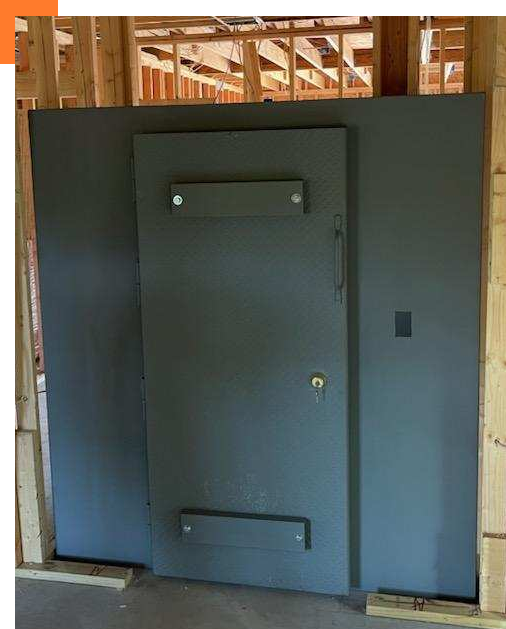
Look for a unit that is fully enclosed, with a floor as well as walls. One design uses 1/4-inch steel and a steel floor, and the safe room steel page shows what that looks like. Then ask about proof: impact testing at Texas Tech and FEMA guidelines are the two names worth asking a builder about.
The Door, Hinges and Handle
Any safe room shelter is only as strong as its door, so give it the most attention. A 36-inch opening is wide enough for wheelchair access, and you can usually choose which side the hinges and handle sit on. Swing direction matters too. FEMA’s safe room swing explains that an inward swing is less likely to be blocked by debris, while an outward swing leaves more floor space inside. Some communities set their own rule, so check with your local building official.
How Much Space Does Your Household Need?
Count everyone who will use it, including pets and anyone who needs a wheelchair, then size up from there. Storm safe rooms on the safe room sizes page range from 4’x4’ to 10’x25’, and height can be custom as well.
Power, Light and the Details Around It
Small details separate usable storm shelters from merely strong ones. Ask about a cut-out for an extension cord if you want power inside, and keep battery-operated lights in the unit either way. It also helps to give your local fire and emergency officials the coordinates of the entrance, which FEMA’s advisory calls vital in recovery. The photo gallery shows finished units in real homes.
Turn the Checklist Into a Shelter That Fits
Settle three things early: whether the unit fits your space, whether the door works for everyone and how much installation will disrupt your home. Before you sign anything, check a builder’s certification and testing. Safe Rooms US has over 25 years of experience and builds each safe room to your size, door side and height. If you are comparing storm safe rooms in Dallas, TX, contact us with your measurements, and we will help with the rest.