
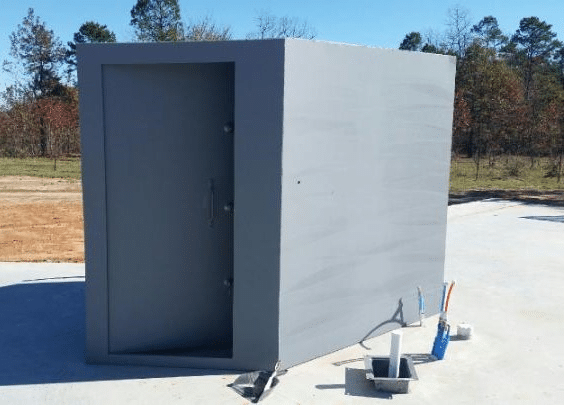
Expansive clay soils in parts of Texas expand when wet and shrink as they dry, causing ground movement that can affect structures and foundations. These conditions can make underground construction more challenging. Above-ground steel storm shelters offer practical advantages, including reduced excavation, flexible placement, and less direct exposure to surrounding soil movement.
For homeowners and businesses in North Texas, above-ground steel shelters can provide a practical way to add a dedicated storm protection space while working around site conditions and existing structures.
Reduced Excavation and Soil Exposure
Expansive clay soils are common in parts of Texas and can expand and shrink as moisture levels change, potentially affecting structures and foundations.
An above-ground steel shelter avoids the extensive excavation needed for an underground installation, limiting the amount of soil disturbance required during installation.
This can be helpful on properties where expansive soils, landscaping, or existing driveways make below-ground construction more complicated. However, the shelter still needs a suitable foundation and anchoring system designed for the site’s conditions.
Proper site preparation and drainage can also help manage ground movement and reduce problems caused by water collecting around the shelter.
Flexible Placement
Above-ground steel safe rooms offer flexibility in how they fit into a property. Depending on the design and site requirements, they may be installed as separate exterior structures, inside garages, or in suitable interior spaces.
This flexibility can help property owners make use of available space without extensive excavation. It can also make access more straightforward for people who have difficulty entering below-ground shelters or navigating stairs.
Safe Rooms US offers steel safe room options for residential and commercial properties. The appropriate placement depends on the building layout, available space, access requirements, and installation specifications.

Corrosion Protection for Long-Term Durability
Although steel provides a durable enclosure, it needs appropriate protection against corrosion. Moisture can cause rust if protective coatings are inadequate or damaged, making coating quality and surface preparation important considerations.
AMPP explains how protective coatings create a barrier between steel and the surrounding environment, helping control corrosion.
For above-ground steel tornado shelters in Texas, inspecting exposed surfaces and addressing coating damage according to the manufacturer’s guidance can help maintain the enclosure over time. Placement also matters: avoiding persistent water accumulation around the shelter can help limit unnecessary moisture exposure.
Drainage and Moisture Management
Above-ground installation reduces direct soil contact with the shelter’s enclosure, but it does not eliminate moisture concerns. Rainwater can collect around the foundation if the site has poor drainage, and doors, joints, and other openings require proper installation to help prevent water intrusion.
Before installation, property owners should consider how rainwater moves across the site and whether grading or drainage improvements are needed. Keeping water from pooling around the shelter can help protect the foundation and limit prolonged moisture exposure.
Long-Term Maintenance for Above-Ground Steel Shelters
Above-ground steel shelters need routine inspections to help keep their components in good condition. Protective coatings should be checked for damage, while doors, hinges, fasteners, and anchoring components should be inspected according to the manufacturer’s recommendations.
The surrounding area also deserves attention. Soil erosion, settling, or changes in drainage near the foundation may warrant further assessment to determine whether corrective work is needed.
Choose for the Site
Above-ground steel storm shelters can offer practical benefits for Texas properties, including reduced excavation, flexible placement, and less direct exposure to surrounding soil movement. Their suitability still depends on the property’s conditions, the shelter’s design, and the requirements for its foundation and anchoring system.
Before installation, consider the available space, drainage, access needs, and documented testing and performance specifications. These factors help ensure that the shelter is appropriate for the property and intended use.
For a tornado shelter in Dallas, Arlington, or Fort Worth, site-specific installation requirements remain important, even when an above-ground design reduces the need for extensive excavation.
Safe Rooms US specializes in custom steel safe rooms for Texas homes and businesses. Explore available steel safe room options or contact our team to discuss a configuration for your property.