When extreme weather strikes, protection depends on more than thick walls or heavy doors. True safety comes from engineering, testing, and strict adherence to national standards. At Safe Rooms US, we specialize in FEMA safe room construction designed to withstand the most violent storm conditions — not guesswork, not shortcuts, but proven performance.
Understanding how FEMA-compliant safe rooms are built helps homeowners see the difference between basic shelters and life-saving structures.
What FEMA Compliance Really Means
A FEMA-compliant safe room is designed according to rigorous guidelines established by the Federal Emergency Management Agency. These standards focus on structural integrity, impact resistance, anchoring systems, and occupant safety during extreme wind events.
To meet FEMA requirements, safe rooms must withstand wind speeds exceeding 250 mph and resist impacts from large debris traveling at high velocity. This includes testing against heavy projectiles to simulate airborne debris during tornadoes and severe storms.
At Safe Rooms US, every FEMA-approved safe room is engineered to meet or exceed these standards. Compliance isn’t a marketing label — it’s a measurable, test-backed requirement.
Engineering, Steel, and Structural Integrity
One of the most critical components of FEMA safe room construction is material selection. FEMA-compliant designs rely on reinforced steel systems that resist deformation, penetration, and collapse under extreme pressure.
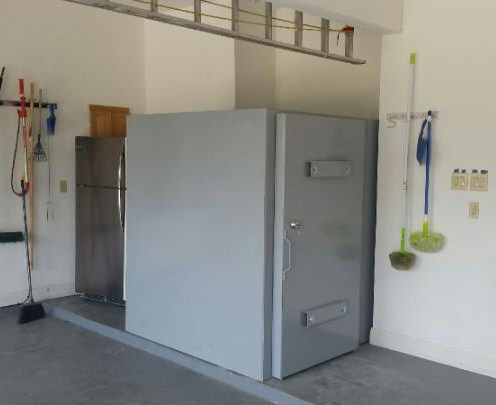
Our steel safe room systems are built using precision-engineered components, reinforced seams, and secure anchoring methods. Each structure is designed to transfer storm forces safely into the foundation, preventing uplift, sliding, or structural failure.
This level of engineering is what separates a certified storm shelter from a basic enclosure. Whether installed as an above-ground safe room or integrated into an existing structure, FEMA compliance ensures predictable performance when conditions are unpredictable.
Testing Standards That Simulate Real Storm Conditions
FEMA compliance isn’t theoretical — it’s proven through testing. Certified designs undergo debris impact testing, pressure testing, and structural analysis to confirm performance under worst-case scenarios.
These tests replicate real-world storm forces, including high-speed debris impacts and sustained pressure loads. Only shelters that pass these evaluations qualify as FEMA-compliant safe rooms.
Safe Rooms US follows these protocols strictly, ensuring every shelter meets national safety benchmarks before installation.
Design Protocols That Prioritize Human Safety

Beyond structural strength, FEMA standards also address occupant safety. This includes ventilation, emergency egress considerations, interior space requirements, and door systems that remain operable after impact.
Our design process integrates all of these elements, creating shelters that are not only strong but usable when they matter most. Every detail supports survivability — not just durability.
Extreme weather demands proven protection, not assumptions.
Safe Rooms US designs and installs FEMA-compliant safe rooms across Texas, providing storm-tested protection built to national safety standards.
Contact Safe Rooms US today to learn how a certified safe room can protect your home and family.