
Storm Shelter Resources

Welcome to the Safe Rooms blog, your trusted resource for severe weather protection, storm shelter technology, and home defense solutions. From navigating FEMA guidelines and comparing above-ground vs. underground storm shelters to expert tips on emergency preparedness, our articles provide the actionable insights you need to protect what matters most. Whether you are planning a custom safe room installation or preparing your family for tornado season, explore our latest guides to build lasting security and peace of mind.

Construction blueprint with a drill and screws on a wooden table.
Blog

What To Look for in a Storm Safe Room? A Dallas Homeowner’s Guide

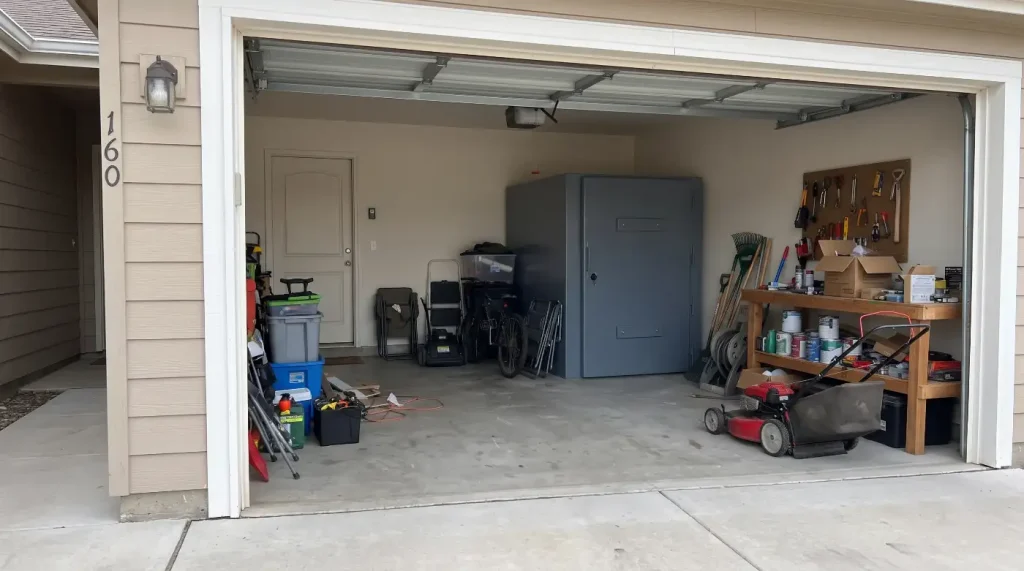
Shopping for a shelter can feel like comparing products that all promise the same thing. Knowing what to look for in a safe room turns that into a short checklist, and most of it comes down to features you can see, measure or ask about. Here is how to tell a purpose-built shelter from a closet that merely feels sturdy. Why an Ordinary Room Falls Short A hallway closet may feel protected, but FEMA’s advisory on
Read More »
north texas tornado funnel
Blog

The Splintered Prairie: North Texas Under the Funnel

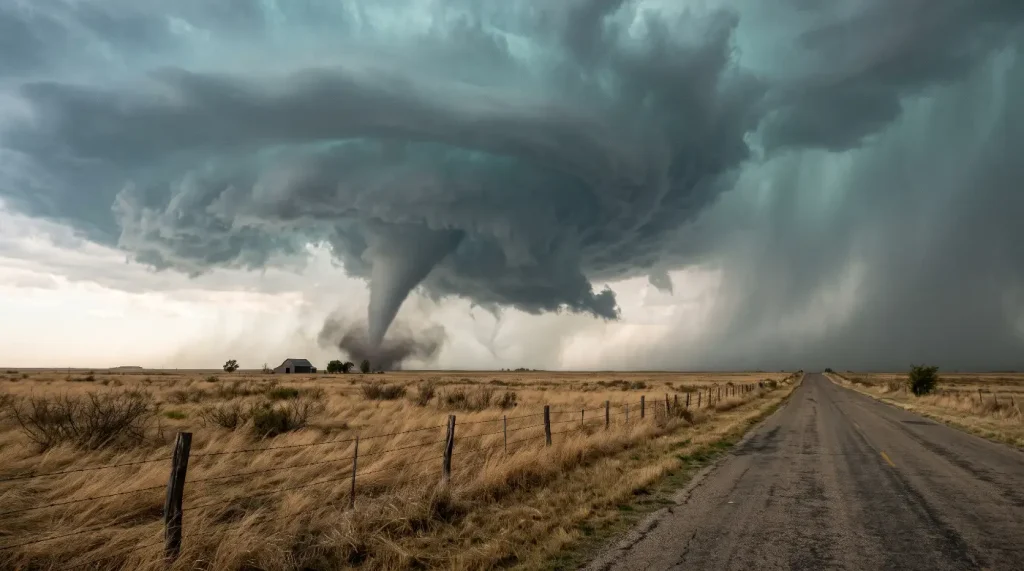
Article Overview Meteorological Convergence Zone: North Texas sits at the collision front of dry desert air, Canadian cold fronts, and moist Gulf airflow, creating severe atmospheric instability. Evolution of Damage Scales: Ground-truth post-disaster forensic surveys transformed wind hazard analysis from the original 1971 Fujita scale to the wind-damage calibrated Enhanced Fujita Scale adopted in 2007. Suburban Exposure Growth: Rapid residential expansion across the Dallas–Fort Worth metroplex continuously increases target density within historically active supercell corridors.

Read More »
tornado warning
Blog

Tornado Emergency vs. Warning: The Critical Difference

Article Overview Operational Escalation: A Tornado Warning indicates a tornado is detected or imminent, whereas a Tornado Emergency indicates a confirmed, violent tornado is actively causing catastrophic damage in a populated area. Strict Issuance Criteria: Under National Weather Service Directive 10-511, forecasters cannot issue a Tornado Emergency without confirmed human hazard, severe structural destruction, and reliable spotter or radar confirmation. Behavioral Mandate: Standard home sheltering may suffice for common warnings, but a Tornado Emergency requires

Read More »
Blog

Above Ground Safe Rooms: Safety Made Simple – Infograph

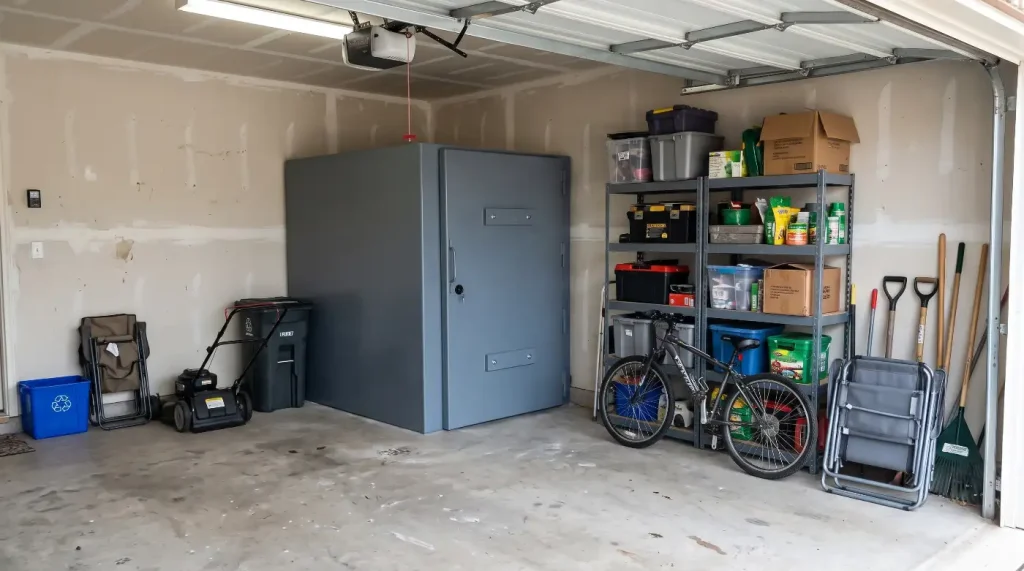
This infographic highlights how above-ground safe rooms provide accessible protection during severe weather events. It explains key features such as FEMA-compliant reinforced steel construction, impact-tested designs, secure entry systems, and practical installation benefits. The content helps homeowners understand how safe rooms can provide reliable storm protection while fitting into everyday living spaces.

Read More »
texas tech
Safe Rooms

Inside the Cannon: How Texas Tech Defeats 250 MPH Debris

Executive Synthesis Empirical Missile Calibration: The Texas Tech National Wind Institute replicates 250 mile-per-hour tornado wind fields by launching a 15-pound, nominal 2×4 lumber projectile at 100 miles per hour using a specialized compressed-air pneumatic cannon. Structural Failure Mechanics: Standard residential construction—including traditional brick veneer, concrete masonry units, and unreinforced drywall—ruptures instantly because hollow, brittle, or weakly fastened materials cannot absorb focused, high-speed dynamic shear loads. Composite Dissipation Thresholds: Certified shelter wall assemblies survive through

Read More »
safe room fema
Safe Rooms

FEMA P-320 vs. FEMA P-361: Safe Room Engineering

Article Overview Structural Intent Divergence: FEMA P-320 governs residential safe rooms sheltering up to sixteen occupants,whereas FEMA P-361 dictates criteria for commercial, civic, and community refuges hosting hundreds under strict institutional oversight. Continuous Load Path Integrity: Both manuals require resistance against 250-mile-per-hour tornado winds,but FEMA P-361 mandates rigorous peer-reviewed structural engineering calculations, internal pressurization analysis, and continuous load path transfers directly to the foundation. Mechanical Life Support Baselines: FEMA P-361 enforces dedicated emergency ventilation, sanitation

Read More »
storm shelter prep
Blog

Baby & Toddler Storm Shelter Prep: Zero-Notice Guide

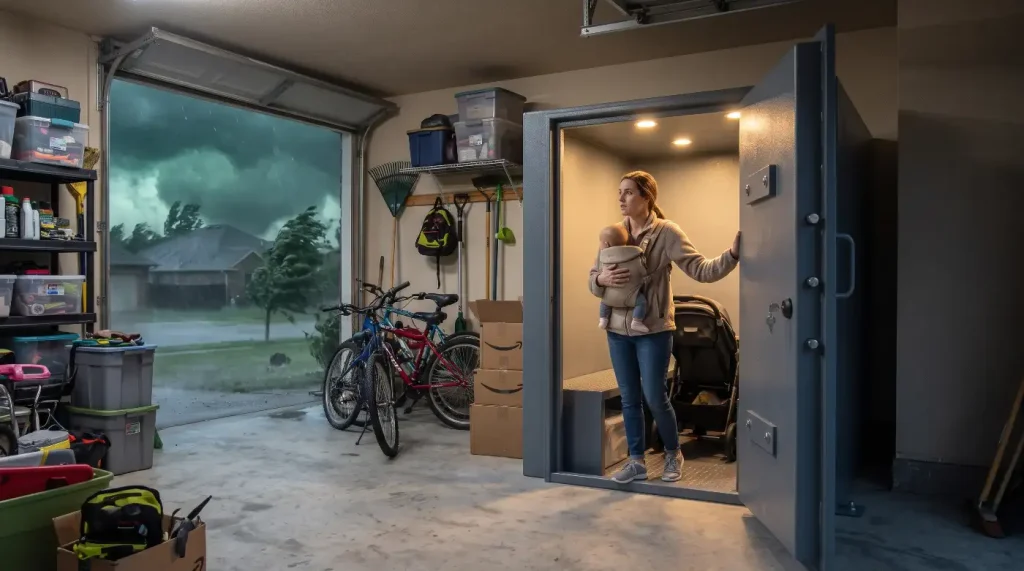
Fast Track Summary Pack ahead for zero-notice alerts: Keep an airtight grab-and-go kit inside your shelter with ready-to-feed formula, diapers, toddler hearing protection, and a lightweight infant carrier. Prioritize immediate walk-in access: Navigating steep, slippery underground shelter stairs while holding a crying infant at 2:00 AM creates severe fall hazards; ground-level steel rooms eliminate entry delays. Insulate against loud barometric noise: Children panic from roaring winds, pressure shifts, and blaring sirens; noise-canceling earmuffs and familiar

Read More »
Unfinished basement with concrete block walls exposed.
Blog

Above-Ground vs. Underground Tornado Shelters for Dallas Homes

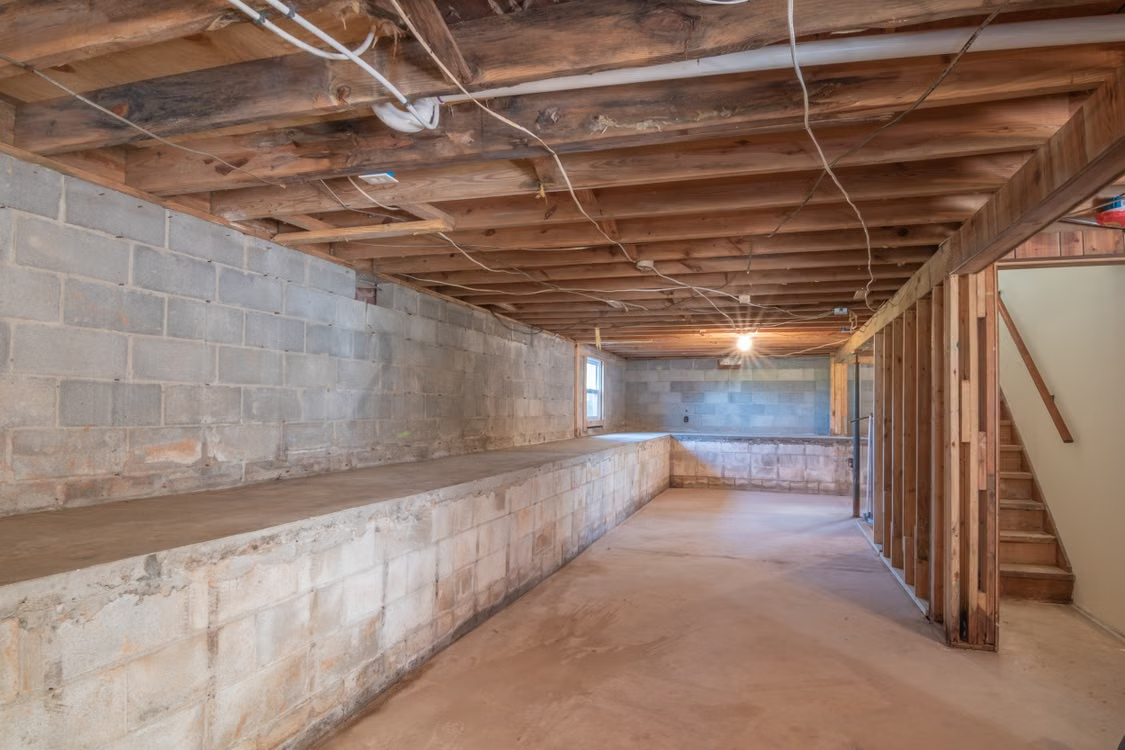
Most comparisons of an above-ground vs underground storm shelter stop at the basics: how easy it is to reach, how much space it takes, how long installation runs. Those matter, and this side-by-side look at access, space and installation covers them. This post adds something different: what FEMA’s engineers found inside shelters of both types after an EF5 tornado struck Moore, Oklahoma, in 2013. Does One Type Protect Better? The FEMA investigation team found that adequately built above-ground

Read More »
safe room
Safe Rooms

EF5 Safe Room Survival: What Really Happens Inside

Fast Track Summary Uncompromising Missile Defense: Certified safe rooms built to FEMA and national shelter standards easily stop a 15-pound wooden two-by-four traveling horizontally at 100 miles per hour, keeping flying debris outside without piercing the protective steel walls. Controlled Air Pressure: Precision baffle vents allow internal air pressure to equalize naturally with the tornado vortex, protecting ears from painful pressure spikes while completely blocking flying gravel and debris. Heavy-Duty Locking Security: Multi-point locking systems

Read More »