Storm Shelter Resources

Welcome to the Safe Rooms blog, your trusted resource for severe weather protection, storm shelter technology, and home defense solutions. From navigating FEMA guidelines and comparing above-ground vs. underground storm shelters to expert tips on emergency preparedness, our articles provide the actionable insights you need to protect what matters most. Whether you are planning a custom safe room installation or preparing your family for tornado season, explore our latest guides to build lasting security and peace of mind.

Blueprint, drill and screws on a table while working through a safe room checklist for a Dallas home
Blog

What To Look for in a Storm Safe Room? A Dallas Homeowner’s Guide

Shopping for a shelter can feel like comparing products that all promise the same thing. Knowing what to look for in a safe room turns that into a short checklist, and most of it comes down to features you can see, measure or ask about. Here is how to tell a purpose-built shelter from a closet that merely feels sturdy. Your Dallas Safe Room Checklist Why an Ordinary Room Falls Short A hallway closet may feel

Read More »
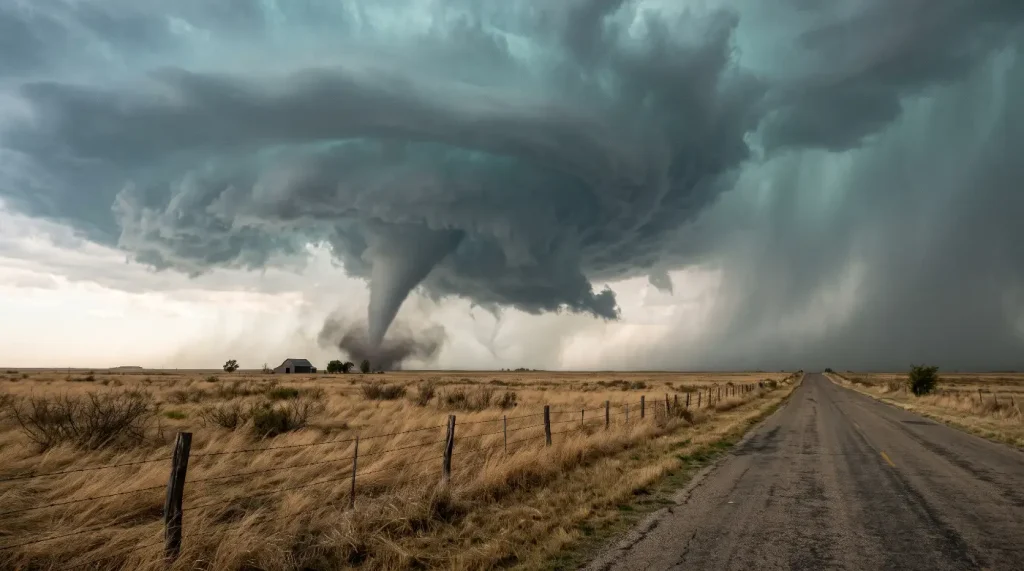
Storm clouds over the open prairie, where North Texas tornadoes threaten fast-growing DFW suburbs
Blog

The Splintered Prairie: North Texas Under the Funnel

Article Overview Meteorological Convergence Zone: North Texas sits at the collision front of dry desert air, Canadian cold fronts, and moist Gulf airflow, creating severe atmospheric instability. Evolution of Damage Scales: Ground-truth post-disaster forensic surveys transformed wind hazard analysis from the original 1971 Fujita scale to the wind-damage calibrated Enhanced Fujita Scale adopted in 2007. Suburban Exposure Growth: Rapid residential expansion across the Dallas–Fort Worth metroplex continuously increases target density within historically active supercell corridors.

Read More »
Severe weather alert graphic comparing a tornado emergency with a standard tornado warning
Blog

Tornado Emergency vs. Warning: The Critical Difference

Article Overview Operational Escalation: A Tornado Warning indicates a tornado is detected or imminent, whereas a Tornado Emergency indicates a confirmed, violent tornado is actively causing catastrophic damage in a populated area. Strict Issuance Criteria: Under National Weather Service Directive 10-511, forecasters cannot issue a Tornado Emergency without confirmed human hazard, severe structural destruction, and reliable spotter or radar confirmation. Behavioral Mandate: Standard home sheltering may suffice for common warnings, but a Tornado Emergency requires

Read More »
Infographic showing above-ground safe room benefits: easy entry, steel construction and impact-tested design
Blog

Above Ground Safe Rooms: Safety Made Simple – Infograph

This infographic highlights how above-ground safe rooms provide accessible protection during severe weather events. It explains key features such as FEMA-compliant reinforced steel construction, impact-tested designs, secure entry systems, and practical installation benefits. The content helps homeowners understand how safe rooms can provide reliable storm protection while fitting into everyday living spaces.

Read More »
Pneumatic air cannon in a wind lab, the setup used in the Texas Tech impact test with 2x4 lumber
Safe Rooms

Inside the Cannon: How Texas Tech Defeats 250 MPH Debris

Executive Synthesis Empirical Missile Calibration: The Texas Tech National Wind Institute replicates 250 mile-per-hour tornado wind fields by launching a 15-pound, nominal 2×4 lumber projectile at 100 miles per hour using a specialized compressed-air pneumatic cannon. Structural Failure Mechanics: Standard residential construction—including traditional brick veneer, concrete masonry units, and unreinforced drywall—ruptures instantly because hollow, brittle, or weakly fastened materials cannot absorb focused, high-speed dynamic shear loads. Composite Dissipation Thresholds: Certified shelter wall assemblies survive through

Read More »
FEMA safe room guidance documents on a desk, comparing FEMA P-320 vs P-361 engineering standards
Safe Rooms

FEMA P-320 vs. FEMA P-361: Safe Room Engineering

Article Overview Structural Intent Divergence: FEMA P-320 governs residential safe rooms sheltering up to sixteen occupants,whereas FEMA P-361 dictates criteria for commercial, civic, and community refuges hosting hundreds under strict institutional oversight. Continuous Load Path Integrity: Both manuals require resistance against 250-mile-per-hour tornado winds,but FEMA P-361 mandates rigorous peer-reviewed structural engineering calculations, internal pressurization analysis, and continuous load path transfers directly to the foundation. Mechanical Life Support Baselines: FEMA P-361 enforces dedicated emergency ventilation, sanitation

Read More »
Grab-and-go bag with formula, diapers and ear muffs, part of storm shelter supplies for a baby
Blog

Baby & Toddler Storm Shelter Prep: Zero-Notice Guide

Fast Track Summary Pack ahead for zero-notice alerts: Keep an airtight grab-and-go kit inside your shelter with ready-to-feed formula, diapers, toddler hearing protection, and a lightweight infant carrier. Prioritize immediate walk-in access: Navigating steep, slippery underground shelter stairs while holding a crying infant at 2:00 AM creates severe fall hazards; ground-level steel rooms eliminate entry delays. Insulate against loud barometric noise: Children panic from roaring winds, pressure shifts, and blaring sirens; noise-canceling earmuffs and familiar

Read More »
Steps leading down into an underground storm shelter, one of two main types of Dallas tornado shelters
Blog

Above-Ground vs. Underground Tornado Shelters for Dallas Homes

Dallas tornado shelters come in two main types, above ground and underground, and the choice affects more than access. Most comparisons of an above-ground vs underground storm shelter stop at the basics: how easy it is to reach, how much space it takes, how long installation runs. Those matter, and this side-by-side look at access, space and installation covers them. This post adds something different: what FEMA’s engineers found inside shelters of both types after an EF5

Read More »
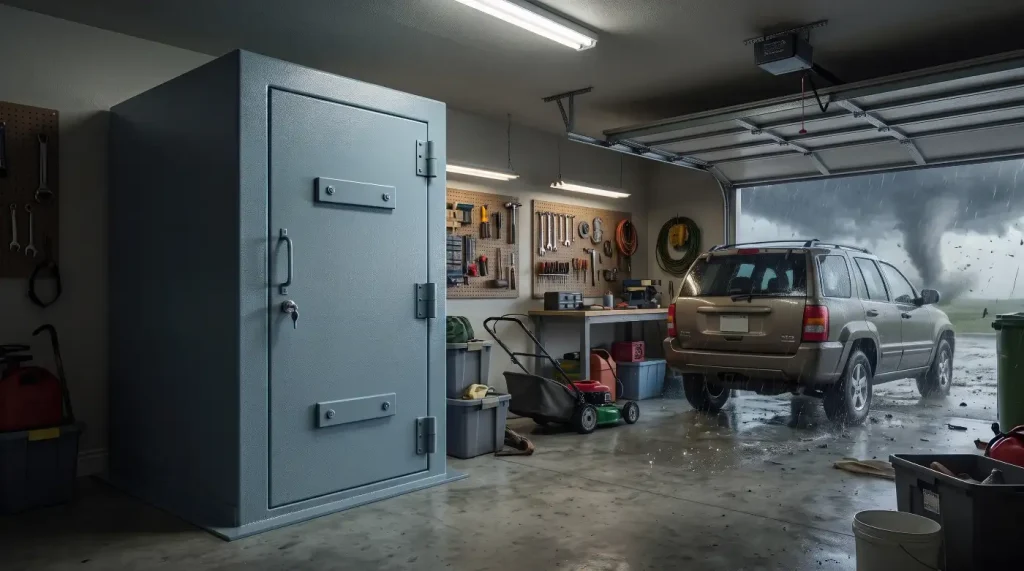
Steel EF5 safe room standing firm beside a home as a violent tornado passes
Safe Rooms

EF5 Safe Room Survival: What Really Happens Inside

Fast Track Summary Uncompromising Missile Defense: Certified safe rooms built to FEMA and national shelter standards easily stop a 15-pound wooden two-by-four traveling horizontally at 100 miles per hour, keeping flying debris outside without piercing the protective steel walls. Controlled Air Pressure: Precision baffle vents allow internal air pressure to equalize naturally with the tornado vortex, protecting ears from painful pressure spikes while completely blocking flying gravel and debris. Heavy-Duty Locking Security: Multi-point locking systems

Read More »