In Dallas, many neighborhoods include open layouts, wide streets, and fewer natural wind barriers, which can allow storm-driven debris to travel farther at higher speeds. This increases the importance of reinforced entry points in any shelter design.
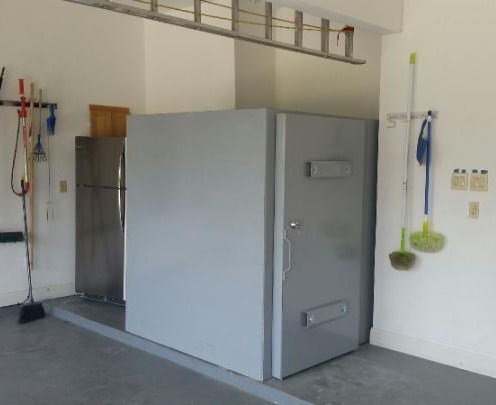
Due to these conditions, safe room doors in Dallas are being built to handle both direct impact and sustained pressure. Unlike standard doors, they are designed as part of a complete system that accounts for how wind and debris behave in North Texas storms.
For homeowners considering storm shelters and safe rooms, this means the door is not just an entry point—it’s a structural component that directly affects how the shelter performs under real conditions.
Why the Door Is the Most Vulnerable Point
A safe room is designed to withstand extreme wind forces and debris impact, but any opening introduces risk. The door is the primary access point, which makes it the most exposed area during a storm. Tornadoes are strong; it doesn’t take much for them to rattle any building.
This is why safe room doors in Dallas are engineered differently from standard residential doors. They are designed to resist both impact and pressure changes that occur during severe weather events.
Impact Resistance and Material Strength
Storm conditions can turn everyday objects into high-speed projectiles. A standard door cannot withstand that level of force.
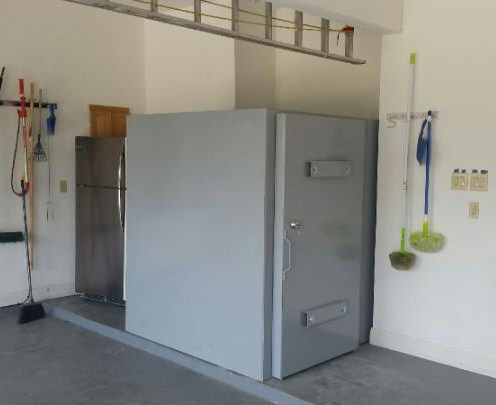
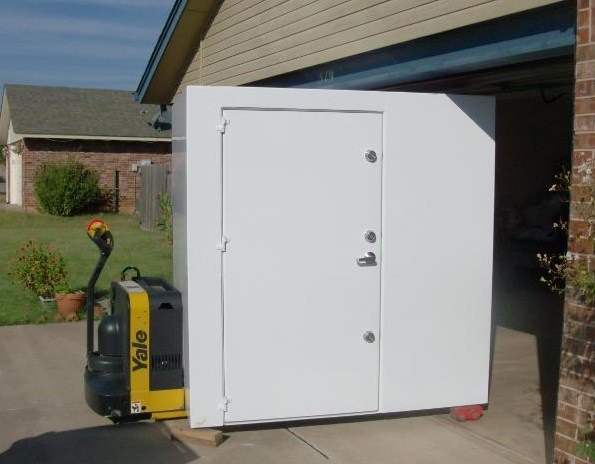
High-quality storm shelters rely on reinforced steel doors that are tested against debris impact. The materials used are thicker, heavier, and specifically designed to prevent penetration.
This ensures that the door remains intact even when exposed to extreme conditions.
Locking Systems That Hold Under Pressure
In high-wind conditions common across Dallas, force isn’t applied evenly to a door—it shifts across the surface depending on pressure and impact. This means a single locking point isn’t enough to keep the door stable under stress.
Modern safe room doors in Dallas use multi-point locking systems that secure the door at multiple positions along the frame. This helps distribute force more evenly, reducing the risk of bending, warping, or failure at a single point.
In many steel storm shelters, this type of system is critical because it reinforces how the door interacts with the frame, not just how it closes. The result is a more stable seal that performs better under both impact and pressure changes.
Frame and Anchoring Matter Just as Much
The door does not function independently—it relies on the frame and anchoring system to perform correctly.
In many tornado shelters, failure occurs not because the door breaks, but because the frame or anchoring system cannot handle the stress.
Proper installation ensures that the entire door system—panel, hinges, locks, and frame—works together as a single reinforced unit.
Sealing and Fit for Structural Stability
Even small gaps around the door can affect performance. A properly fitted door helps regulate internal pressure and prevents structural stress during storms.
Well-designed safe room doors in Dallas are installed with precision to ensure a tight seal, supporting the overall stability of the safe room.
Focus on the System, Not Just the Door
A safe room door is not just a component—it’s part of a larger system that determines how well the structure performs under extreme conditions.
At Safe Rooms US, we build and install door systems that are engineered as part of the entire safe room, not treated as an afterthought. Contact us to make sure your safe room in Dallas is built to meet the demands of real storm conditions.