
Fast Track Summary
Pack ahead for zero-notice alerts: Keep an airtight grab-and-go kit inside your shelter with ready-to-feed formula, diapers, toddler hearing protection, and a lightweight infant carrier.
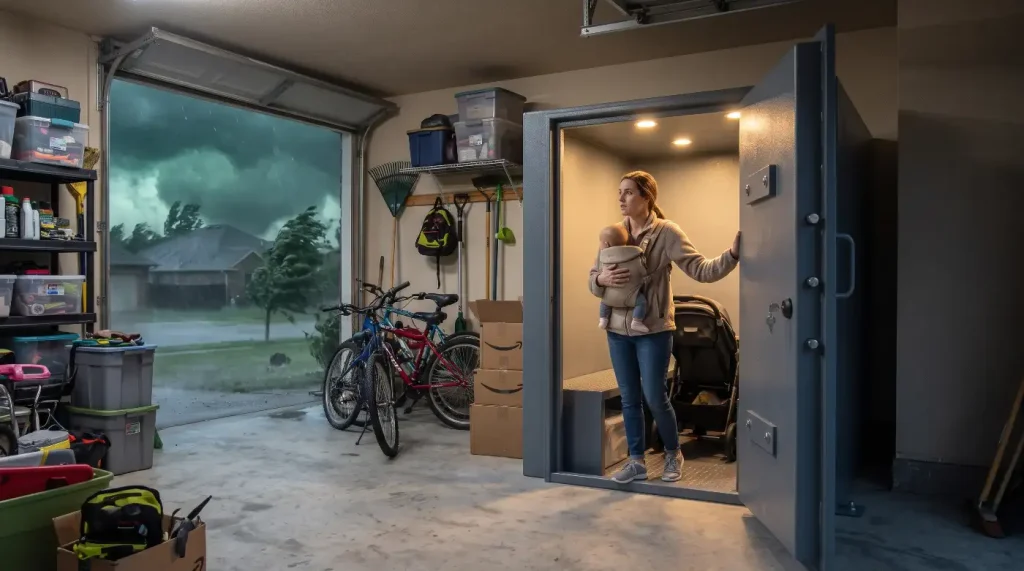
Prioritize immediate walk-in access: Navigating steep, slippery underground shelter stairs while holding a crying infant at 2:00 AM creates severe fall hazards; ground-level steel rooms eliminate entry delays.
Insulate against loud barometric noise: Children panic from roaring winds, pressure shifts, and blaring sirens; noise-canceling earmuffs and familiar comfort toys preserve calm inside safe spaces.
Anchor to certified impact standards: EF5 tornadoes throw heavy lumber at 100 mph; certified shelters built to FEMA and ICC standards keep the smallest family members secure from debris.
If you lived through the May 3, 1999 Bridge Creek-Moore twister, the 2013 Moore storm, or the historic devastation of Wichita Falls, you already know that Tornado Alley does not offer second chances. When the outdoor warning sirens wail at two o’clock in the morning, your heart drops into your stomach. If you have an infant asleep in a crib down the hall or a sleepy toddler clinging to your neck, the panic multiplies tenfold. You have seconds—not minutes—to grab your little ones, cross the dark house, and seal the hatch against 250 mph atmospheric violence.
Every spring, parents across Oklahoma City, Norman, Edmond, Fort Worth, Dallas, and Lubbock face that exact midnight scramble. Protecting infants and toddlers during violent twisters requires more than basic supplies; it demands a dedicated strategy designed for instant action. Standard storm kits packed with heavy pocket knives, complex camp stoves, and canned beans fail when an eight-month-old is screaming for warm milk or a two-year-old is crying from painful atmospheric ear pops. Creating an infant-friendly safe haven requires specialized knowledge, proven shelter design, and an understanding of how young children process high-stress weather disasters.
What Are the Essential Storm Shelter Supplies for Babies and Toddlers?
When packing storm shelter supplies for babies, parents must store pre-measured, ready-to-feed formula, clean drinking water, age-graded diapers, medical supplies, physical identification, and infant hearing protection directly inside the shelter. Keeping an airtight, pre-packed survival tub inside your safe room eliminates the danger of hunting through dark nursery drawers during sudden midnight tornado warnings across Oklahoma and Texas.
How Should Parents Pack Nutrition and Hydration for Zero-Notice Warnings?
Store ready-to-feed liquid formula bottles, pre-measured nursery water, clean bottles, and non-perishable toddler pouches directly inside your room. Midnight storm warnings leave no time to boil water, wash nipples, or measure messy formula scoops in the dark.
Ready-to-feed infant nourishment: Pack sealed single-serve formula bottles that do not require added water or warming, keeping your infant fed without relying on interrupted house electricity.
Pre-washed silicone feeding supplies: Keep two dedicated silicone bottles with protective caps sealed inside gallon freezer bags to maintain sterile surfaces in damp conditions.
Shelf-stable toddler snacks: Store pureed fruit squeeze pouches, soft teething crackers, and dry oat cereals that soothe hungry youngsters without presenting choking hazards.
Purified water reserves: Maintain at least one gallon of pure water per young child to manage bottle preparation, basic cleanliness, and toddler hydration during extended waits.
What Sanitation, Diapering, and Medical Essentials Are Mandatory Inside the Room?
Keep a two-week stock of diapers, heavy-duty sensitive wipes, diaper rash barrier creams, and liquid infant medications inside an airtight plastic container. Tornado damage frequently interrupts neighborhood municipal water and sewage services for multiple days.
Airtight diaper reserves: Seal thirty diapers one size larger than your baby currently wears inside vacuum-sealed bags to accommodate sudden childhood growth spurts.
Heavy-duty antiseptic wipes: Pack thick, chemical-free wipes to clean hands, sanitize pacifiers dropped on the floor, and handle diaper changes without running tap water.
Childhood fever and pain medicine: Store infant acetaminophen, calibrated dosing syringes, and pediatric antihistamines in a clearly labeled waterproof first-aid pouch.
Sanitary disposal containers: Keep scented heavy-duty trash sacks with durable twist ties to seal soiled diapers away from the small, confined living space.
Why Is Hearing and Head Protection Critical for Infants During High-Wind Events?
Equip every infant and toddler with properly fitted passive noise-reducing earmuffs and a cushioned safety helmet before the storm hits. Tornadoes generate deafening low-frequency sound rumbles over 130 decibels that cause acute ear pain and terror in developing ears.
Pediatric noise-dampening earmuffs: Shield delicate inner-ear drums from the roaring train-engine rumble of 250 mph winds and sudden siren blasts using padded earmuffs.
Cushioned head protection: Fit your toddler with an adjustable sports or bike helmet to protect against accidental bumps if the child stumbles in the dark.
Soothing ear pressure relief: Pack multiple silicone pacifiers on secure clips to encourage active swallowing that naturally relieves the rapid pressure drops of a funnel cloud.
Soft tactile comfort blankets: Keep clean, familiar nursery swaddles and fleece blankets inside the unit to wrap children snugly against drafty outdoor temperatures.
How Do You Manage Infant Sleep, Confinement, and Identification in an Emergency?
Use a hands-free fabric baby carrier, a compact foldable travel bassinet, and updated physical identification papers worn on your child’s body. Hands-free gear ensures you maintain full physical control of your baby while securing locks or operating heavy doors.
Wearable infant wrap carriers: Fasten your infant directly against your chest using a structured fabric carrier,keeping both of your hands completely free to steady family members.
Foldable padded floor mats: Place interlocking foam floor tiles or a roll-up travel bassinet over the hard floor so your toddler can rest off the bare slab.
Physical identification tags: Slip waterproof ID cards containing your baby’s full name, birth date, parent phone numbers, and pediatric records inside your baby’s zippered clothing.
Pre-charged white noise machines: Pack a battery-powered sound soother to mask outside thunder, high winds,and metallic vibrations that prevent frightened toddlers from resting.
Homeowners exploring dedicated life-safety rooms can review tested models on the Safe Rooms US above-ground steel safe rooms page to see how flat-floor layouts easily accommodate infant travel cribs and toddler supplies.
Why Are Above-Ground Steel Shelters the Safest Choice for Families with Young Children?
Above-ground steel shelters offer level, zero-step access that prevents dangerous slips, trips, and drops when carrying an infant or guiding a toddler through the dark. Certified above-ground safe rooms withstand EF5 tornado winds and 100 mph flying debris while avoiding the flooding, rust, and shifting clay soils that plague below-ground shelters.
Why Does Level Entry Outperform Below-Ground Shelters for Parents Carrying Babies?
Zero-step thresholds allow parents to run directly into the safe room without navigating steep, slippery stairs or heavy sliding floor hatches while holding an infant. Tripping down steep metal ladder steps in a slick garage at 2:00 AM presents an immediate, dangerous hazard to small children.
Elimination of fall hazards: Step across a level threshold on your garage floor without risking catastrophic falls down narrow concrete cellar pits while holding a baby.
Instant entry speed: Move three children into an above-ground unit in five seconds, avoiding the slow, awkward descent required by underground hatches.
Stroller and wagon accessibility: Roll double strollers, travel cribs, or rolling baby supply bins directly across the threshold without lifting awkward, heavy weights.
Calm transition environment: Walk into a clean, well-lit, upright steel room that feels like an ordinary room rather than a dark, damp subterranean hole that terrifies toddlers.
To understand the engineering behind these level designs, learn more on the Safe Rooms US certifications and testingpage.
How Does Heavy Steel Withstand EF5 Tornado Winds and 100 MPH Flying Debris?
Heavy structural steel plate and reinforced perimeter channel framing deflect 15-pound two-by-four projectiles fired at 100 mph without cracking, puncturing, or failing. Certified safe room doors absorb devastating kinetic impacts that would blast regular residential hollow-core or wooden doors into splinters.
Tested impact resistance: Deflect heavy flying timbers and windborne structural lumber thrown by 250 mph winds without puncturing the inner occupant zone.
Multi-point steel locking pins: Secure the door frame using thick, solid steel pins that hold tight against violent low-pressure suction forces that pull normal doors off hinges.
Continuous door frame overlaps: Prevent microscopic airborne debris and splintered framing materials from cutting past the heavy structural steel door edges.
Protective steel ceiling plates: Stop falling roof trusses, collapsing brick chimneys, and overhead heavy timber rafters from caving in on your resting children.
Homeowners can review complete structural designs and wall-thickness ratings by browsing the storm shelters overview directory.
How Do Red Dirt and Black Clay Soils Threaten Underground Garage Shelters?
Permian red clay in Oklahoma City and heavy black clay across the Dallas–Fort Worth Metroplex expand and contract violently when wet, crushing, cracking, or floating underground shelters. Above-ground units sit safely bolted on top of your garage foundation slab, remaining completely dry and unaffected by shifting local dirt.
Protection from moisture intrusion: Avoid smelly standing groundwater, subterranean insect nests, and thick mold blooms that trigger infant asthma and respiratory illnesses.
Elimination of shifting soil stress: Prevent expanding clay soils from warping the metal frame or jamming the sliding access tracks of underground garage pits.
Freedom from hydrostatic lift: Stop the dangerous buoyant forces that pop hollow underground tanks upward out of saturated Oklahoma and North Texas soil after downpours.
Preservation of dry baby gear: Keep infant formula, cloth diapers, and emergency electronics stored in clean,bone-dry ambient garage room conditions year-round.
How Does Heavy-Duty Slab Anchoring Keep the Shelter Planted During Storms?
Heavy-duty industrial steel expansion anchors drill deep into the cured garage slab, mechanically clamping the safe room directly to the immense weight of the house foundation. This solid connection prevents violent tornado winds from lifting or tipping the room even if the surrounding home structure is blown away.
Mechanical slab clamping: Drive heavy steel expansion anchors around the inner perimeter channel to lock the entire room directly into the reinforced foundation.
Post-tension cable safety scanning: Locate and map critical high-tension steel reinforcement cables built inside modern DFW and Oklahoma slabs before drilling anchor holes.
Wind shear deflection: Transfer extreme horizontal wind pressures downward into the wide concrete pad,preventing the steel structure from sliding across the garage.
Overturning resistance: Counteract massive aerodynamic lift forces using the ballast weight of the entire concrete floor to keep the room anchored in place.
How Do Smart Ventilation Baffles and Emergency Exits Protect Your Family?
Engineered steel ventilation baffles let air flow freely into the room while blocking incoming flying gravel and driving rain from hitting your little ones. Inward-swinging doors and included mechanical lifting jacks guarantee that fallen garage beams or insulation will never trap you and your baby inside.
Debris-deflecting airflow baffles: Circulate fresh ambient air through shielded vents that stop outside debris and rainwater from spraying the interior living space.
Atmospheric pressure balancing: Allow natural air movement so your baby’s ears equalize smoothly,preventing severe ear pain caused by sudden outdoor pressure drops.
Inward-opening door systems: Pull the secure door inward into the safe room to step out cleanly, even if fallen roof debris or sheetrock piles up against the outside.
Emergency extraction jacks: Keep heavy-duty mechanical jacks inside the room to quickly push away any heavy timber or collapsed garage frames blocking your exit.
Families ready to install a proven shelter can request an assessment directly through the Safe Rooms US site consultation page.
For More Information
Learn about residential safe room design requirements and projectile criteria directly from the FEMA P-320 Guidelines on FEMA.gov.
Review wind cannon projectile impact research and debris testing data at the Texas Tech University National Wind Institute.
Operational Takeaways
Store Supplies in Place: Never rely on grabbing baby gear during sirens; keep a dedicated, sealed container of formula, diapers, water, and medicines stationed inside your room permanently.
Equip Ear and Head Protection: Fasten noise-canceling infant earmuffs and a soft helmet before closing the door to shield your child from the roar of tornado winds and flying debris.
Choose Zero-Step Above-Ground Access: Avoid ladder rungs, wet steps, and heavy sliding floor lids; walk-in above-ground safe rooms provide the fastest entry when carrying sleepy children.
Protect Foundations During Installation: Ensure installers use precision post-tension slab scanners to protect internal concrete cables while drilling heavy steel anchor bolts.
Register Shelter GPS Coordinates: File your shelter’s exact GPS location with local fire dispatchers in Oklahoma City, Moore, Norman, Edmond, Fort Worth, or Lubbock so first responders can locate your safe room immediately.
Do not wait for rotating wall clouds and 2:00 AM sirens to find out if your home can protect your baby. Safe Rooms US delivers turnkey, FEMA-compliant above-ground steel storm shelters and safe rooms built to withstand direct EF5 tornadoes across Oklahoma City, Moore, Norman, Edmond, Tulsa, the Dallas–Fort Worth Metroplex, Lubbock,Wichita Falls, and throughout Tornado Alley.
Our technicians provide complimentary, transparent on-site garage inspections to analyze your concrete foundation,safely scan post-tension cables, and identify the ideal spot for zero-step family access.
Call Safe Rooms US today at 469-629-6000 or schedule your free on-site consultation online at our contact Page. Secure your home, protect your smallest family members, and gain complete peace of mind this storm season.